Best Apps for Nonverbal Communication
If you ever go nonverbal, it can be a serious concern. Forcing yourself to speak is no good, but you can’t go without communication either. Fortunately, AAC (augmentative and alternative communication) apps can help you be heard even when using your voice is out of the question. These apps offer practical ways to communicate without speaking, often pairing text-to-speech with inputs like typing, tapping symbols, or handwriting.
Try One of These AAC Communication Apps
It’s important to have an alternative method of communication available if you’re someone who goes nonverbal. That’s why we’ve curated this list of AAC apps for different ages, budgets, and communication styles. Some are better for children who use picture-based AAC, while others are a better fit for teens and adults who want faster, more flexible text-based communication.
Best for Teens and Adults: Spoken - Tap to Talk AAC
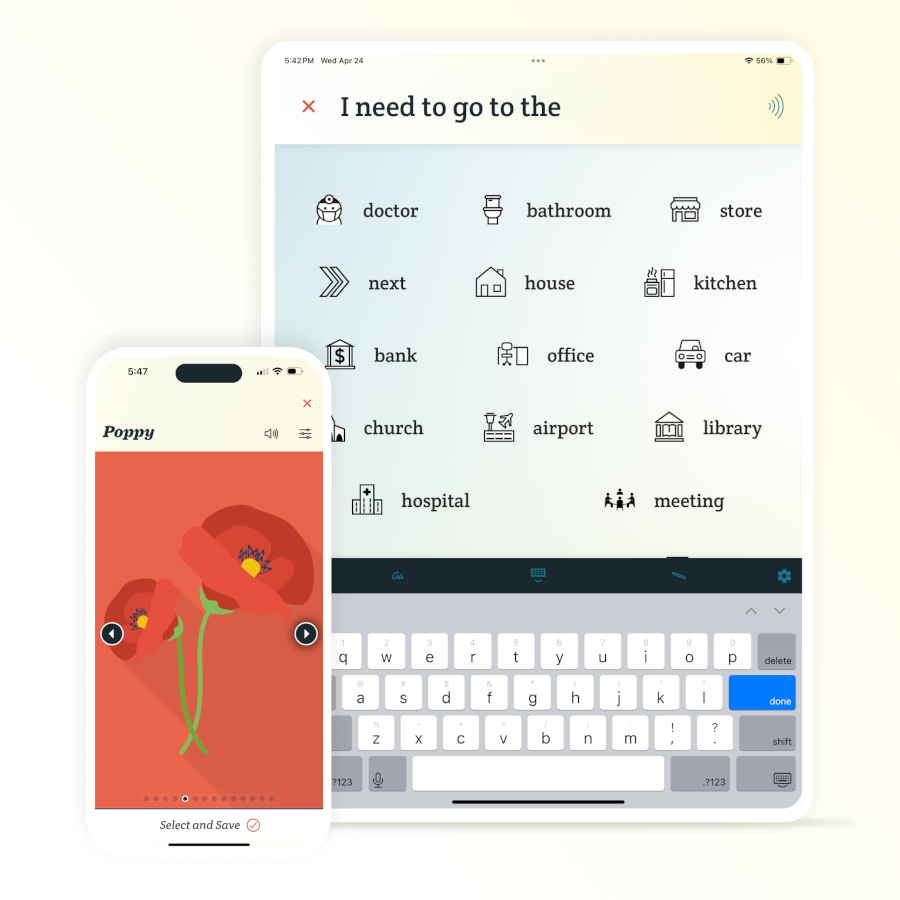
Availability: Android, iOS, and Mac
Price: Free (with optional premium upgrade for $12.99/month, $99.99/year, or $249.99 for life)
Spoken is a top-rated AAC app designed for nonspeaking or semispeaking autistic adults and teenagers. Unlike most AAC apps, it does not rely on grids or folders of preset vocabulary words. Instead, it learns how you communicate and suggests words based on your unique speech patterns. The fact that you can use almost any word makes it ideal for those who are used to verbal communication.
If predictive text isn’t your preference, Spoken also has options to type, draw, or handwrite messages. The app can take any of these inputs and convert what you said into speech, using a natural-sounding, customizable voice of your choosing.
Best Traditional AAC App: Proloquo2Go
Price: $249.99 with additional in-app purchases
Availability: iOS
Proloquo2Go is one of the most well-known AAC apps and is a common choice among autistic AAC users. It features a traditional, symbol-based communication system with text-to-speech output. The app can be adjusted to match different skill levels, making it useful for users of all ages. It also supports multiple languages (English, Spanish, French, and Dutch) and can even be used for bilingual communication.
If you’re looking for a traditional AAC app, Proloquo2Go is a good choice. It’s extremely customizable with a robust vocabulary compared to other apps based on communication boards.
Best for Fast Word Access: Speak For Yourself
Price: $299.99 with additional in-app purchases
Availability: iOS
Speak for Yourself was designed by speech-language pathologists using a research-backed approach. It’s ideal for younger users, as it follows motor learning principles and expands vocabulary as communication skills grow. However, anyone who goes nonverbal can benefit from its design, since every available word is accessible within two taps, making sentence construction quick and efficient.
Best for Children: Leeloo AAC
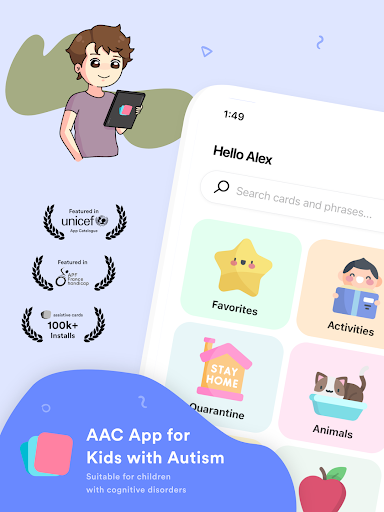
Price: Free (with optional premium upgrade for $6.99/month, $59.99/year, or $99.99 for life)
Availability: Android and iOS
Leeloo is designed for young nonverbal communicators. It’s perfect for children because it has fun illustrations, a simple layout, and an easy learning curve. The ability to create multiple profiles allows for safer experimentation if you want to explore different settings. The app also supports multiple languages, and its basic communication features are free.
Leeloo is available on both the App Store and Google Play, making it easy to access on either major mobile platform.
Best for Beginners: Otsimo AAC
Price: $5.49/month or $35.99/year
Availability: Android and iOS
Otsimo is known for creating apps specifically for autistic users. Their AAC offering is a great choice for children and beginner AAC users who need communication assistance during nonverbal episodes. It offers a simple interface and plenty of customization options, allowing users to edit folders, cards, and layouts. If you or a loved one goes nonverbal and needs an app with an easy-to-use interface and adaptable features, Otsimo is worth considering.
Bottom Line
The best app for nonverbal communication depends on the user’s age, communication style, and support needs. AAC apps like Spoken, Proloquo2Go, Speak For Yourself, Leeloo, and Otsimo can all help nonverbal people communicate more easily.
Whether you’re choosing a nonverbal communication app for yourself or helping someone else find the right one, the most important question is how that person communicates most comfortably. Someone who can type and wants the freedom to say almost anything will usually do best with an app like Spoken. Someone who benefits more from visible buttons, symbols, and a structured layout may be better served by a traditional AAC app like Proloquo2Go, Speak For Yourself, Leeloo, or Otsimo.
Age and experience level matter too. A child or beginner may need a simpler AAC app with a more visual layout, while an older teen or adult may find a text-based communication app faster and less limiting. If possible, try more than one app and pay attention to what makes communication feel easiest, quickest, and least frustrating. The best AAC app for nonverbal communication is the one the user can actually rely on when they need to communicate in real life.